Why Great Service Isn't an Industry Thing : It's a Human Thing
Updated: Jan 1
I watched something interesting unfold at a bank last week. The teller ahead of me was processing transactions with mechanical precision: efficient, accurate, professional. When my turn came, a different employee stepped up. Same bank, same procedures, same computer system. But something felt completely different.
She noticed I seemed rushed, asked if I was heading somewhere important, and when I mentioned a medical appointment, she quietly expedited a few steps without making it feel like special treatment. Same transaction, same outcome, but I left feeling like a person instead of account number 47 in the queue.
Here's what struck me: they both worked for the same organization, followed the same protocols, and had access to the same training. The difference wasn't in their industry expertise or technical skills. The difference was entirely human.
The Industry Training Myth
We've somehow convinced ourselves that great service is about industry-specific knowledge and procedures. Hotels teach hospitality, airlines teach customer service, restaurants teach guest relations. Each sector has its own certification programs, best practices, and operational standards.
But I've seen extraordinary service in hardware stores and forgettable experiences at five-star resorts. I've felt genuinely cared for at a tire shop and completely invisible in luxury retail environments.
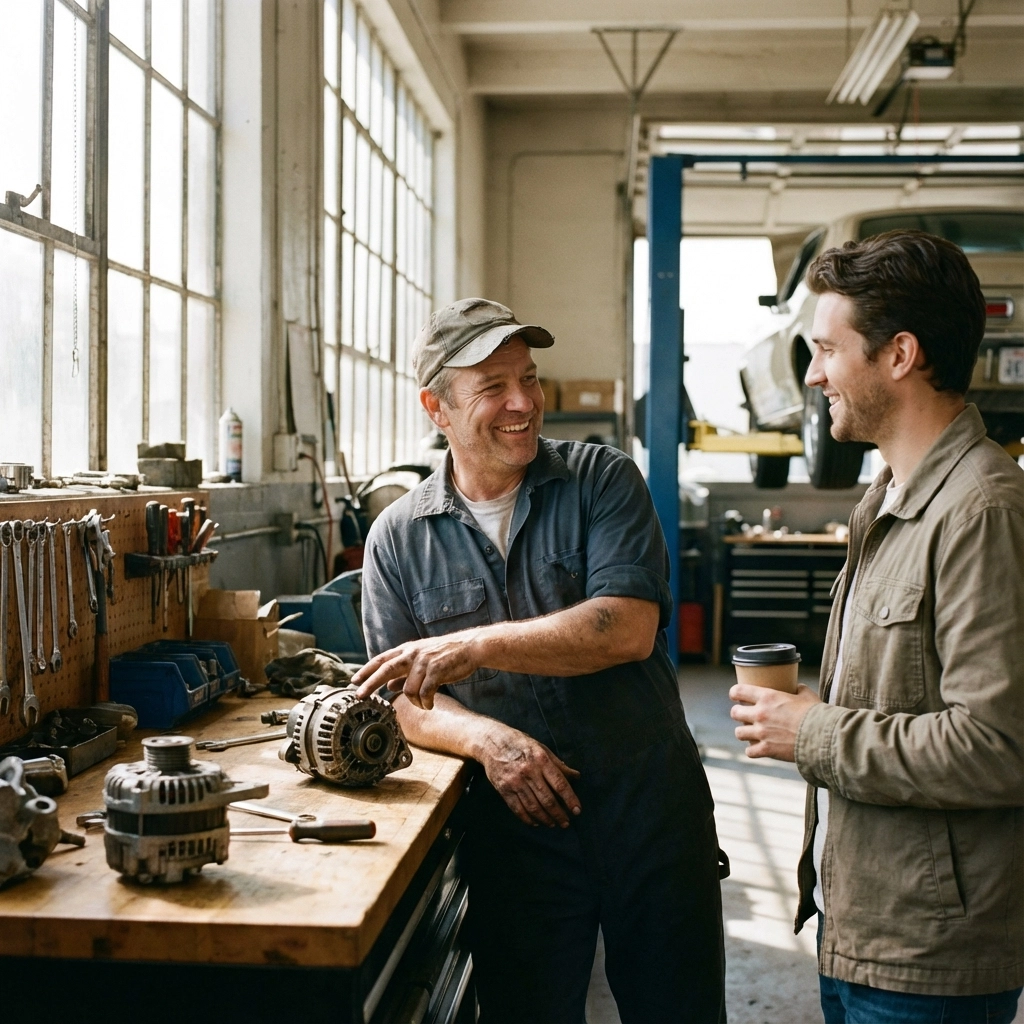
The mechanic who takes a moment to explain what he found, who notices you seem worried about the cost and walks through options without making you feel foolish: he's not drawing on automotive industry training. He's drawing on something much more fundamental.
The nurse who remembers your name from last week's visit, who sees the anxiety in your face and takes thirty seconds to explain what's happening: she's not following a healthcare protocol. She's responding to a human moment with human awareness.
What We're Actually Responding To
When people describe memorable service experiences, they rarely talk about technical competence. They talk about feeling seen, understood, or unexpectedly cared for.
"They remembered my name." "They could tell I was having a rough day." "They went out of their way without making it feel like a big deal." "I felt like they actually listened."
These aren't industry skills. They're human skills. The ability to read a room, to sense when someone needs reassurance or space, to pick up on unspoken concerns: these capacities exist in every person, regardless of where they work.
I think about the pharmacy tech who noticed an elderly customer struggling with a prescription bottle and quietly asked if she'd like the larger-print labels. Or the cable installer who saw toys scattered in the living room and took extra care to route wires where little hands couldn't reach them.
Neither of these moments required industry training. They required presence, awareness, and the choice to act on what they noticed.
The Real Source of Great Service
Here's what I've observed across every sector: people who consistently create memorable moments share certain human qualities that have nothing to do with their job description.
They notice things. Not just what's directly in front of them, but the person behind the transaction, the emotion behind the request, the story behind the interaction.
They care about the outcome for the other person, not just completing their own task. There's a difference between processing a return and helping someone solve a problem. Between taking an order and making sure someone has a good experience.

They're present in the moment instead of going through motions. You can feel the difference between someone who's mentally already moved on to the next task and someone who's fully engaged with what's happening right now.
Most importantly, they've made a choice about how they want to show up. Not because their manager told them to, not because it's in the employee handbook, but because it aligns with how they see themselves and their role in other people's experiences.
When Systems Get in the Way
Sometimes industry structures actually work against these human instincts. I've seen banking policies that prevent tellers from taking an extra moment with confused customers. Healthcare systems that rush nurses through interactions that should have time to breathe. Retail environments that measure success in transactions per hour rather than problems solved.
The irony is that organizations often layer on more industry-specific training when what they really need is to remove the barriers that prevent people from being human with each other.
The best leaders I know understand this. They create space for employees to use judgment, to respond to what they see, to care about outcomes instead of just following scripts.
Where Hospitality Really Lives
True hospitality: the kind that creates lasting impressions: lives in ordinary moments between regular people. It's not about grand gestures or luxury amenities. It's about one human being making another human being feel valued in a simple interaction.
The grocery store clerk who helps you find an item without making you feel like you're interrupting her day. The receptionist who senses you're nervous about a appointment and offers genuine reassurance. The delivery driver who takes care with packages because he knows they matter to someone.

These moments happen everywhere, across every industry, every day. Not because of specialized training programs, but because some people have chosen to bring their full humanity to their work.
The Choice We All Have
Every role, in every industry, offers opportunities to make someone's day a little easier or a little brighter. It might be as simple as making eye contact, listening carefully, or taking one extra step to ensure someone feels taken care of.
The question isn't whether your industry values service. The question is whether you've decided to value the humans you encounter in your work.
Because at the end of the day, people won't remember the efficiency of your systems or the comprehensiveness of your training program. They'll remember how you made them feel in the moments that mattered to them.
That's not an industry thing. That's entirely, beautifully human.
Where have you experienced memorable service in unexpected places? What made those moments stand out from the routine interactions we all have every day?
Comments